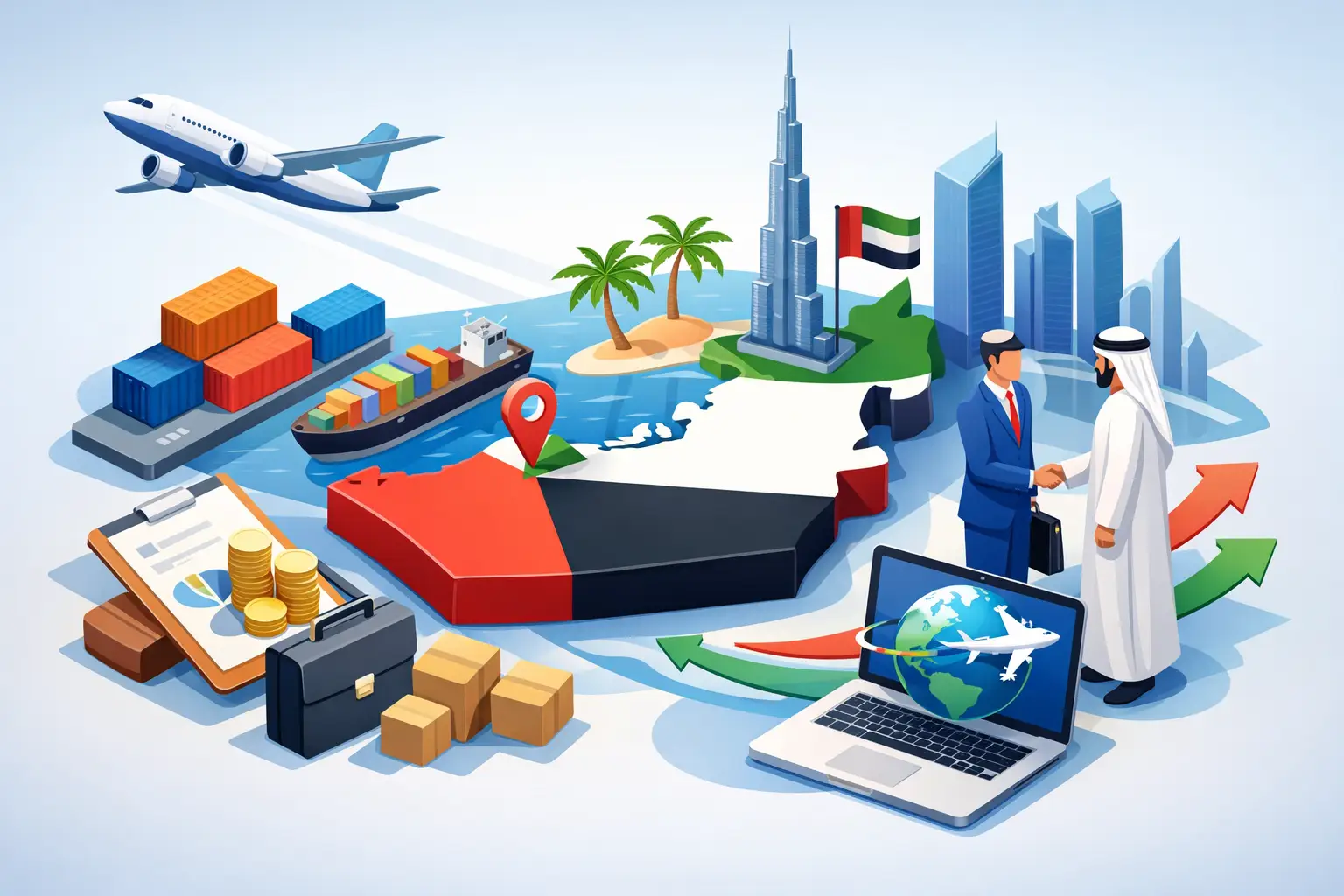

The UAE rewards speed, but it does not reward guesswork. Many companies enter the market because they see demand, strong infrastructure, and regional reach. The businesses that gain traction fastest are usually the ones that treat expansion as an operating plan, not just a registration exercise. If you are evaluating how to expand a business to UAE, the real question is not only where to incorporate. It is how to build a structure that supports banking, compliance, sales, and long-term growth from day one.
How to expand a business to UAE without costly delays
Expanding into the UAE can be straightforward when the setup matches your commercial goals. It becomes expensive when a company chooses the wrong legal structure, applies for licenses that do not fit its activity, or underestimates the practical steps required after incorporation.
The UAE offers real advantages for foreign investors: access to international trade routes, a business-friendly environment, modern infrastructure, and a strong base for serving the Gulf, Africa, and South Asia. At the same time, each advantage comes with decisions that need to be made carefully. Your jurisdiction, your business activity, your visa needs, your banking profile, and your tax obligations all affect how efficiently you can launch.
That is why expansion should begin with a commercial assessment. Before any paperwork starts, define what the UAE entity needs to do in practice. Will it invoice local clients? Import products? Hold inventory? Hire staff? Apply for financing? Run e-commerce operations? The right answers shape everything that follows.
Start with the right market entry model
One of the first decisions is whether you need a new UAE company, a branch, or another market entry structure. There is no single correct option for every business.
A new legal entity often makes sense for companies that want operational flexibility, a clear local presence, and room to scale. A branch can work for established foreign companies that want to extend their parent company into the UAE, but the suitability depends on the nature of the activities and the wider business strategy.
This is also where founders often weigh mainland against free zone setup. Free zones can be efficient and attractive for certain business models, especially where international trade, service delivery, or lean operations are the priority. Mainland companies may be a better fit when the business expects broader access to the local market, direct customer engagement, or specific commercial relationships inside the UAE.
The trade-off is practical, not theoretical. A structure that looks less expensive at setup can create restrictions later. A structure that appears broader in scope may involve more operational considerations. The best choice depends on how you plan to sell, hire, bank, and grow.
Choose business activities and licensing carefully
In the UAE, your license is tied to your approved business activities. This is not a minor administrative step. It affects what your company is allowed to do and can influence banking, compliance, and contract execution.
A common mistake is selecting activities that are too narrow because they reduce initial costs. Another is choosing activities that are too broad without a clear commercial need. Both can create problems. If your actual operations do not match the licensed activity, you may face obstacles when opening accounts, signing agreements, or meeting regulatory requirements.
The better approach is to map your actual revenue model first. If your company provides consulting, sells goods online, markets digital services, or manages cross-border trade, your license should reflect that reality. Expansion works best when the legal structure mirrors the business model instead of forcing the business into an unsuitable framework.
Plan for banking before the company is formed
Many overseas businesses assume company formation is the hard part and banking will follow automatically. In practice, business account opening is often one of the most sensitive stages of UAE expansion.
Banks review substance, ownership, business activity, source of funds, and the commercial logic behind the UAE entity. A company can be legally registered and still face delays if its documentation is inconsistent or its operating model is unclear. This is especially relevant for startups, holding companies, high-risk sectors, and businesses with cross-border ownership structures.
If account opening is essential to your launch timeline, plan for it early. Your incorporation documents, business plan, shareholder profile, invoices, contracts, and proof of operations should align. The stronger and more transparent your file, the better your position.
For companies that will need working capital, trade finance, or future lending, this matters even more. Expansion is not only about opening a bank account. It is about building a financial foundation that supports payroll, supplier payments, cash flow management, and access to funding as the business grows.
Build tax and compliance into the expansion plan
Any company considering how to expand a business to UAE should treat tax and compliance as part of setup, not as a task for later. The UAE remains an attractive jurisdiction, but businesses still need to meet their obligations properly.
Depending on your activities, revenue, and structure, your company may need to consider VAT registration, corporate tax obligations, bookkeeping requirements, and ongoing filing responsibilities. These are not just back-office issues. They affect pricing, reporting, audit readiness, and investor confidence.
For example, a company entering the market quickly without a clean accounting process may struggle later when reconciling revenue, claiming VAT correctly, or preparing financial records for tax submissions. A growing business that expects to apply for financing or work with larger clients should be especially careful here. Good records are not only about compliance. They support credibility.
This is one area where early discipline saves time and money. It is far easier to design compliant operations from the start than to correct them after transactions, payroll, and invoicing are already in motion.
Do not treat setup and growth as separate projects
Many businesses enter the UAE with a legal entity but no market readiness. They complete incorporation, secure visas, and open an office, then realize they still need a website, lead generation strategy, local messaging, and digital credibility.
That gap slows momentum. A company may be fully registered yet commercially invisible.
The UAE is a competitive market, and buyers often validate a business quickly through its online presence, brand presentation, and responsiveness. If your expansion depends on attracting clients, partners, or distributors, then your digital presence should be built alongside the company setup process.
That includes a professional website, clear service positioning, localized messaging where relevant, and digital marketing activity aligned with your commercial goals. A business expanding into the UAE should not wait until after launch to think about demand generation. Setup creates the platform. Growth comes from visibility, trust, and consistent outreach.
Think beyond launch costs
A low-cost entry can be attractive, especially for startups and smaller companies. But expansion decisions should be based on total operating impact, not only initial registration fees.
A cheaper setup may lead to higher restructuring costs later if you need to change license activities, add visas, adjust your office arrangement, or fix a weak banking position. On the other hand, a more comprehensive setup may make sense if it reduces friction in hiring, compliance, and customer acquisition.
This is where tailored planning matters. A consulting firm entering the UAE with two founders will have different needs from an e-commerce brand, a logistics company, or a regional trading business. The right setup is the one that supports the next phase of the company, not just the cheapest phase.
Work with a partner that sees the whole picture
Expansion succeeds when legal setup, finance, compliance, and commercial execution are coordinated. If these functions are handled in isolation, delays are more likely. A company might get formed by one provider, then struggle with banking, then scramble for tax support, then start over on digital growth.
A more efficient path is to approach the UAE market with a joined-up strategy. That means evaluating the business model first, choosing the right structure, preparing strong banking documentation, organizing tax support, and making sure your brand is market-ready. For businesses that want practical execution support rather than fragmented advice, that integrated approach can significantly reduce risk.
At My Eloah, this is where clients often see the greatest value – not only in getting established, but in building an operating model that is ready to function and grow.
The UAE can be one of the most effective markets for regional expansion, but only when the foundation matches the ambition. If you take the time to structure the move properly, the market becomes much easier to navigate and far more rewarding to scale in.