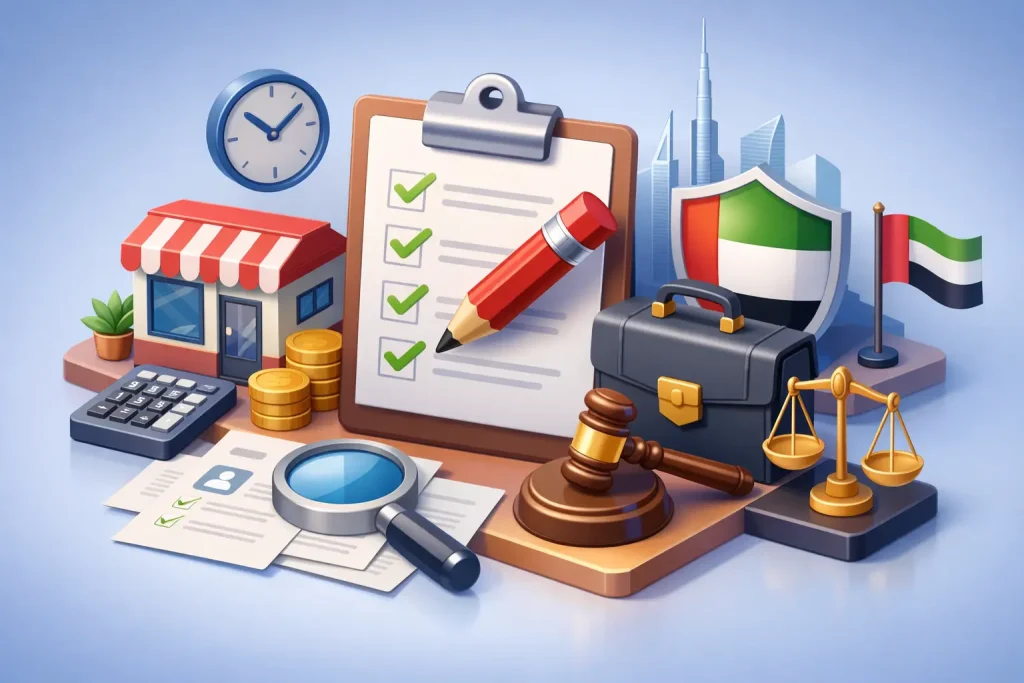
A missed renewal date can cost far more than the renewal itself. For many founders, the real problem is not one major violation – it is a series of small compliance gaps that build up quietly until they affect banking, visas, tax filings, or day-to-day operations. That is why a practical small business compliance checklist UAE companies can actually follow matters so much.
In the UAE, compliance is not a single task completed at setup. It is an ongoing operating discipline. A company may be properly incorporated and still fall behind if its trade license expires, its Ultimate Beneficial Owner records are outdated, its VAT filings are late, or its accounting records are incomplete. Small businesses are especially exposed because one person often handles finance, admin, and operations at the same time.
The right approach is simple: know what applies to your business, track deadlines carefully, and treat compliance as part of business continuity rather than paperwork.
Why a small business compliance checklist UAE businesses use should be practical
Founders often search for a master checklist, but the UAE does not work on a one-size-fits-all model. Compliance depends on where the company is registered, what activities it conducts, whether it has employees, whether it is VAT registered, and whether it crosses the thresholds for corporate tax or economic substance-related obligations.
A mainland professional services firm will not face exactly the same requirements as a free zone trading company. A business with no staff has a different compliance burden than one sponsoring multiple employees. That said, most small businesses share a core set of responsibilities, and those are the items worth reviewing first.
Corporate and licensing records
Start with the legal basics. Your trade license must remain valid, and all supporting company documents should match the current reality of the business. If your office address has changed, your activities have expanded, or your ownership structure has been updated, those changes may need to be reflected in official records.
This includes checking your incorporation documents, tenancy or office documentation, establishment card details where relevant, and shareholder records. If your company operates under a specific approval or regulated activity, industry-specific permits may also need renewal alongside the trade license.
The trade-off here is timing. Some businesses delay amendments to avoid admin work or extra fees. That can create bigger issues later, especially during bank reviews, audits, investor due diligence, or visa processing.
Key items to review in your company file
Your business should be able to quickly produce a current trade license, incorporation documents, shareholder or partner details, office lease or registered address records, and any activity-specific approvals. If these are scattered across inboxes and paper files, that is already a risk.
UBO and company transparency obligations
Many small businesses overlook Ultimate Beneficial Owner requirements after setup. If the ownership or control structure changes, the company should update its internal records and, where required, notify the relevant authority. The exact process can vary by jurisdiction, but the principle is consistent: regulators expect transparency around who ultimately owns or controls the business.
This is also one of the first areas reviewed by banks and compliance teams. If your internal records say one thing and your official submissions say another, onboarding delays and compliance questions tend to follow.
Tax registration and filing discipline
For most small businesses, tax compliance sits at the center of the checklist. Even if your business is lean, tax obligations can become complex quickly once revenue grows, cross-border transactions begin, or expenses are not being recorded properly.
VAT remains a primary area to monitor. If your taxable supplies exceed the mandatory threshold, registration is not optional. Some businesses choose voluntary registration earlier for commercial reasons, but that decision should be based on transaction patterns and cash flow, not guesswork.
Corporate tax adds another layer. Many founders assume small means exempt. That is not always true. Liability, registration obligations, filing requirements, and relief eligibility depend on turnover, entity status, free zone position, and how the business is structured.
What to check for VAT and corporate tax
Confirm whether your business is required to register, whether registration has been completed on time, and whether filings are being prepared from accurate accounting records. You should also confirm that tax invoices meet the required standard, input VAT claims are supported, and payment deadlines are diarized in advance.
If your books are incomplete, tax compliance becomes reactive very quickly. That is where many penalties begin – not from tax strategy errors, but from weak bookkeeping.
Accounting records and financial controls
A compliant business should be able to explain its numbers. That means maintaining proper bookkeeping, reconciling bank transactions, keeping invoices and receipts, and preparing management accounts that reflect the real position of the company.
This is not only about filing taxes correctly. Good records support loan applications, investor readiness, bank reviews, and better decision-making. They also reduce the risk of underreporting revenue, overstating expenses, or missing liabilities.
For small businesses, the common weak spot is inconsistency. Records are updated when a filing deadline approaches, then ignored again. A monthly discipline is far safer than a quarterly scramble.
Payroll, visas, and employment compliance
If you employ staff, compliance goes beyond salary processing. You need to maintain valid work permits and residency visas, monitor renewals, comply with wage and contract requirements, and keep employee records organized.
Businesses should also review whether employment contracts reflect actual job terms and whether leave, final settlement, and payroll calculations are handled correctly. A company with just two or three employees can still face serious disruption if visa renewals are missed or labor documentation is outdated.
It also helps to separate what is legally required from what is operationally convenient. Informal arrangements may feel easier in the early stage, but they create risk if an employee dispute arises.
Banking and transaction compliance
Banks in the UAE apply detailed compliance checks, and small businesses often feel this pressure during account opening, periodic reviews, or unusual transaction activity. A valid license alone is not enough. Banks may request updated KYC documents, proof of business activity, invoices, contracts, and explanations for incoming or outgoing funds.
That means your compliance checklist should include banking readiness. Keep company documents current, ensure signatory records are accurate, and make sure your transactions align with your licensed activities. If your business model has changed significantly, update the relevant records before a bank flags the mismatch.
For founders, this is where integrated support matters. A business that is legally compliant but poorly documented can still face banking friction.
Beneficial compliance habits that prevent bigger problems
The strongest compliance systems are usually not the most complicated. They are the most consistent. Small businesses benefit from assigning ownership of each requirement, maintaining a central deadline calendar, and reviewing obligations monthly rather than only at renewal time.
A useful working rhythm is to review license and visa dates monthly, bookkeeping and reconciliations monthly, VAT and tax positions quarterly where relevant, and governance records whenever ownership or operational changes occur. If no one inside the business has the time or expertise to manage this, external support is often more cost-effective than fixing noncompliance later.
A realistic small business compliance checklist UAE founders can follow
If you want a practical standard, your business should be able to answer yes to the following questions without hesitation. Is the trade license active and aligned with actual business activities? Are corporate records, shareholder details, and UBO information current? Are VAT and corporate tax obligations assessed correctly and filed on time where applicable? Are accounting records complete, reconciled, and audit-ready? Are employee visas, payroll records, and labor documents valid? Are bank compliance documents organized and consistent with the business model?
If the answer is no or uncertain on any point, that area deserves immediate attention.
There is also a commercial side to all of this. Compliance supports growth. It makes business account opening easier, improves your financing position, reduces operational interruptions, and gives founders confidence when expanding. For companies that want structured support across setup, tax, financial records, and operational compliance, a partner such as My Eloah can help turn scattered admin into a managed process.
The best time to fix compliance is before someone else asks for the paperwork.