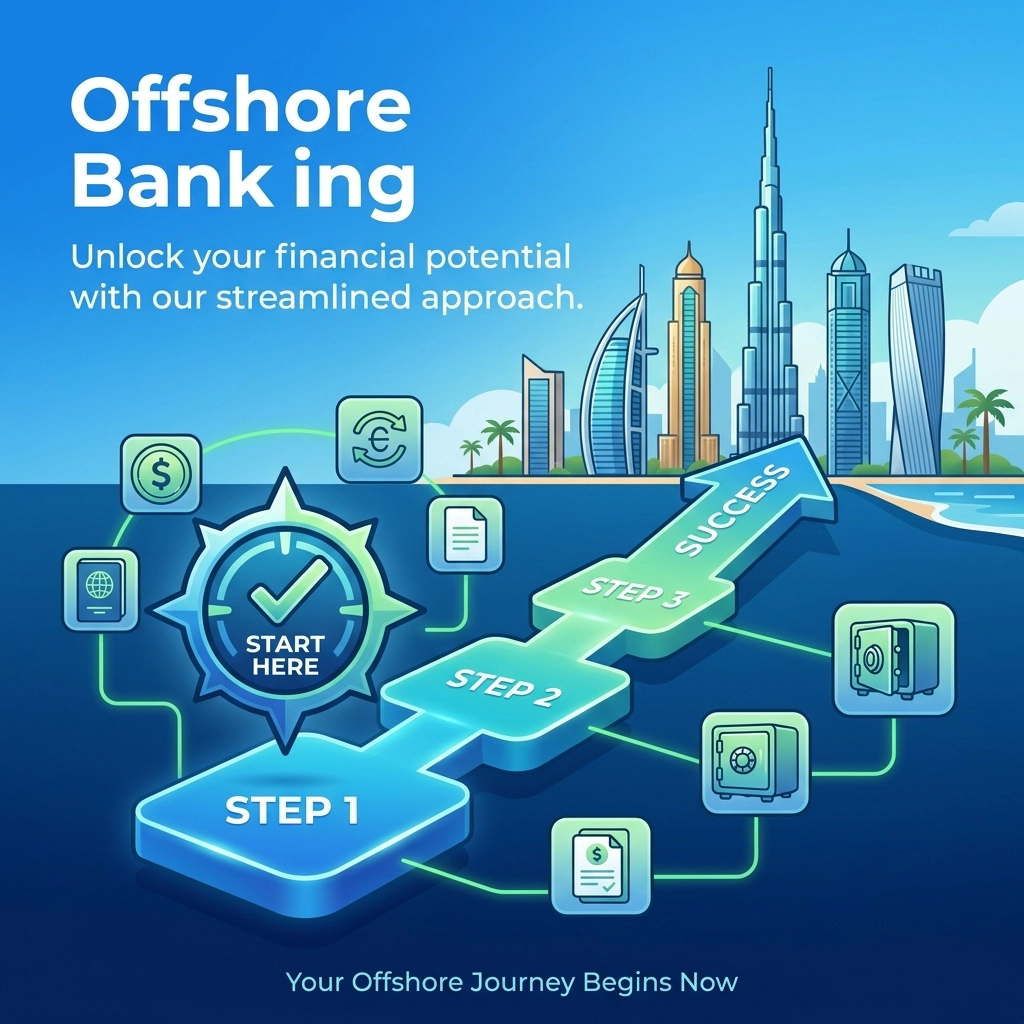
The Ultimate Guide to Opening an Offshore Bank Account in Dubai: Everything You Need to Succeed

Navigating the complexities of international finance requires a strategic partner and a clear roadmap. Dubai has established itself as a premier global financial hub, offering unparalleled stability, world-class infrastructure, and a tax-efficient environment for international investors. However, opening an offshore bank account in Dubai is no longer a simple administrative task; it is a rigorous process governed by stringent international compliance standards.
At ELOAH LLC, we specialize in simplifying these complexities. This comprehensive guide is designed to provide you with the professional insights and step-by-step clarity needed to secure a Dubai offshore company bank account and optimize your international financial operations.
Understanding the Landscape of Offshore Banking in Dubai
In the context of the UAE, "offshore banking" typically refers to an account held within a UAE-based financial institution by a non-resident individual or a non-resident company. These companies are often registered in specific jurisdictions such as Jebel Ali Free Zone (JAFZA) or Ras Al Khaimah International Corporate Centre (RAKICC).
The appeal of an offshore company bank account in Dubai lies in the UAE’s robust regulatory framework, overseen by the UAE Central Bank and the Dubai Financial Services Authority (DFSA). Business owners choose Dubai for its:
- Economic Stability: A pegged currency (AED to USD) and a resilient economy.
- Multi-Currency Capabilities: Seamlessly manage funds in USD, EUR, GBP, and AED.
- Global Connectivity: Efficient international transfer systems and access to world-class trade finance products.
- Privacy and Protection: High standards of confidentiality within the bounds of international reporting standards like CRS and FATCA.
Choosing the Right Structure: Personal vs. Corporate
Before initiating the application, we must determine the appropriate structure for your financial goals. The requirements and bank "appetite" vary significantly between personal and corporate accounts.
Personal Offshore Accounts
These accounts are tailored for high-net-worth individuals seeking to protect wealth or manage global income. While accessible to non-residents, banks often require a substantial initial deposit, typically ranging from USD 10,000 to USD 100,000, depending on the institution's tier.
Corporate Offshore Company Accounts
For businesses involved in international trade, consulting, or e-commerce, a Dubai offshore company bank account is essential. These accounts are usually linked to offshore entities (like RAKICC) or Free Zone companies. Banks look for a clear, logical business model and evidence of real economic substance. At ELOAH LLC, we often guide our clients through business formation strategies that align with banking requirements to ensure a smoother onboarding process.

Caption: A professional representation of Dubai’s financial district, symbolizing the stability and growth potential of the UAE banking sector.
Selecting the Ideal Bank: Local vs. International
One of the most critical decisions in this journey is choosing between a local UAE bank and an international institution with a presence in Dubai.
-
Local Banks (e.g., Emirates NBD, Mashreq, FAB, ADCB):
- Pros: Deep understanding of the local regulatory environment, faster local transactions, and often more flexible for regional business activities.
- Cons: May have stricter requirements for non-resident entities without a physical UAE presence.
-
International Banks (e.g., HSBC, Standard Chartered, Citibank):
- Pros: Seamless global transfers, familiar platforms, and excellent for businesses with multi-jurisdictional operations.
- Cons: Highly stringent KYC (Know Your Customer) processes and typically higher minimum balance requirements.
Our business account opening services focus on matching your specific profile with the bank most likely to approve your application, saving you months of potential delays.
Mandatory Documentation for Offshore Entities
To succeed in opening an offshore bank account in Dubai, your documentation must be impeccable. Banks in the UAE operate under a "risk-based approach," meaning the more transparent your records, the lower the perceived risk.
For Corporate Entities:
- Constitutional Documents: Certificate of Incorporation, Memorandum and Articles of Association, and Shareholder Registry.
- Proof of Business Activity: A detailed business plan, latest invoices, contracts with suppliers/clients, and a professional website.
- KYC on Principals: Valid passports and proof of residence (utility bills or bank statements) for all Ultimate Beneficial Owners (UBOs) and signatories.
- Source of Wealth: Documented evidence of how the company’s capital was generated.
- Bank Statements: Usually 6 months of personal or corporate statements from an existing bank to demonstrate a clean financial history.
For Individuals:
- Valid Passport: With a clear entry stamp (if applicable).
- Proof of Address: A recent utility bill or official document from your home country.
- Reference Letter: A letter from your current bank confirming a satisfactory relationship.

Caption: A checklist and professional documents on a desk, highlighting the importance of meticulous preparation in the banking application process.
The Step-by-Step Guide to Opening an Offshore Bank Account in Dubai
We follow a proactive approach to ensure our clients' success. The process generally follows these five strategic steps:
Step 1: Pre-Screening and Feasibility
We begin by analyzing your business activity and jurisdictions of operation. Not all banks accept all industries. We conduct a "pre-check" with relationship managers to gauge their appetite for your specific profile before any official submission.
Step 2: Documentation Legalization
If your offshore company is registered outside the UAE, your documents may need to be notarized and legalized by the UAE Embassy in the country of origin and subsequently by the Ministry of Foreign Affairs (MOFA) in Dubai.
Step 3: Application Submission and KYC Interview
Once the pack is ready, we submit the formal application. Most banks require at least one in-person meeting in Dubai with the authorized signatory for KYC purposes. This is a crucial moment to clearly explain your business model.
Step 4: Compliance Review
The bank’s compliance department will review your application. This phase can take anywhere from 3 to 8 weeks. During this time, the bank may request additional "Enhanced Due Diligence" (EDD) documents, such as proof of ownership of other businesses or more detailed invoices.
Step 5: Account Activation and Funding
Upon approval, you will receive your account details. You must then fulfill the initial deposit requirement to activate the account fully and gain access to online banking and corporate tools.
Overcoming Common Rejection Reasons
Many international business owners face rejections in the UAE offshore banking sector. Understanding the "why" is the first step toward prevention. Common reasons include:
- Lack of Economic Substance: The bank feels the company is a "brass-plate" entity with no real operations.
- Complex Ownership Structures: Multi-layered corporate ownership without a clear UBO chart often triggers red flags.
- High-Risk Jurisdictions: If your clients or suppliers are located in sanctioned or high-risk countries, approval becomes significantly harder.
- Inconsistent Narrative: Discrepancies between the business plan, the website, and the provided invoices.
At ELOAH LLC, we provide strategic advisory to address these hurdles before they result in a rejection. By refining your business profile and ensuring all documentation tells a consistent story, we maximize your potential for success.
Regulatory Compliance: CRS, FATCA, and AML
It is vital to understand that an offshore account in Dubai is not a tool for tax evasion. The UAE is a signatory to the Common Reporting Standard (CRS) and the Foreign Account Tax Compliance Act (FATCA). This means the UAE banks will share financial information with the tax authorities of your home country.
Our role is to ensure your setup is fully compliant with UAE's Anti-Money Laundering (AML) and Counter-Terrorism Financing (CTF) laws. Maintaining transparency is the only way to ensure the longevity of your banking relationship. For those seeking assistance with local tax regulations alongside their banking, our VAT and Corporate Tax services offer comprehensive support.

Caption: Digital security and compliance concept, illustrating the robust regulatory framework of the UAE financial system.
Why Choose ELOAH LLC for Your Banking Needs?
Opening an offshore bank account in Dubai is a strategic move that requires expert guidance. The landscape is constantly shifting, with banks updating their internal policies frequently. Partnering with a dedicated consultancy like ELOAH LLC ensures you have an expert guide through these complex processes.

We offer bespoke methodologies tailored to your unique business needs. Whether you are at the beginning of your journey with company formation or you are an established entity looking to expand your financial footprint in the UAE, we provide the proactive approach necessary for efficiency and compliance.
Ready to unlock your business growth in the UAE?
Contact us today for a tailored consultation, and let us help you navigate the nuances of the Dubai banking sector with confidence. Our team is committed to your financial health and the long-term success of your international enterprise.