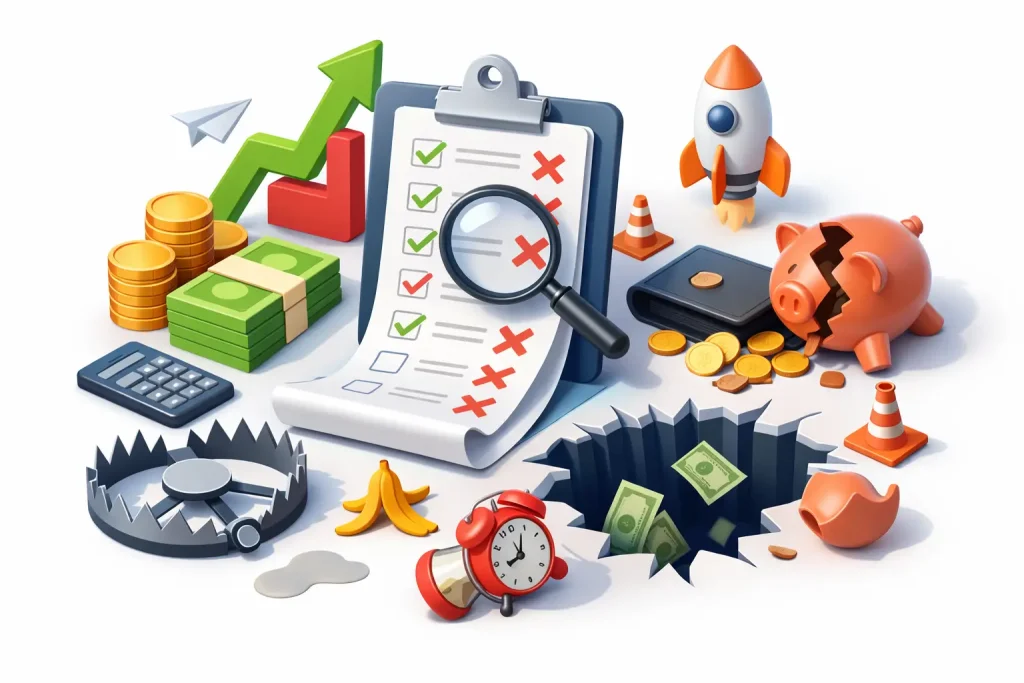
A startup can look healthy on paper and still run into trouble by the end of the month. That is why startup cash flow mistakes are often more dangerous than slow sales, especially in the early stage when every payment date matters and working capital is limited.
For founders building in the UAE, this risk is even more practical than theoretical. You may be funding setup costs, waiting on client payments, managing supplier terms, and handling tax obligations at the same time. Revenue can be growing while cash remains tight. The gap between those two realities is where many young companies lose momentum.
Why startup cash flow mistakes happen so early
Most founders do not ignore cash flow because they are careless. They miss it because they are focused on launching, selling, hiring, and delivering. In service businesses, agencies, consultancies, ecommerce brands, and trading companies alike, attention usually goes to revenue first. Cash management gets treated as an accounting task instead of an operating discipline.
That is a costly assumption. Profit tells you whether the business model can work. Cash flow tells you whether the business can keep operating long enough to prove it.
The early stage also creates distorted signals. A founder may receive a strong first month of sales, a director loan, or seed capital and assume the business has room to spend. In reality, that money may already be committed to licensing, payroll, rent, inventory, technology, logistics, or compliance costs. Without a clear cash plan, short-term confidence can turn into a payment problem quickly.
1. Confusing revenue with available cash
This is one of the most common startup cash flow mistakes because revenue feels like progress. A signed contract, a completed sale, or a large invoice can create a false sense of security. But revenue is not the same as money in the bank.
If clients pay in 30, 60, or 90 days, the business still needs enough cash to cover operations in the meantime. The same issue appears when founders invest heavily in delivery before collecting deposits or milestone payments. Growth can actually increase strain if receivables rise faster than collections.
The fix is simple in principle and harder in practice. Track cash in and cash out by date, not just by invoice value. If payment timing is uncertain, assume delays and plan conservatively.
2. Underestimating setup and operating costs
Early budgets are often optimistic. Founders price obvious expenses but miss the full cost of becoming operational. In the UAE, that may include licensing, visa-related expenses, office requirements, bank account setup delays, software subscriptions, insurance, legal support, and tax administration.
Then the business begins trading and a second layer of costs appears. Marketing spend takes longer to convert. Contractors need faster payment than customers provide. Inventory requires storage. Website improvements, branding updates, and compliance support all add up.
Underestimating costs does not always come from poor planning. Sometimes it comes from treating one-time expenses as isolated events. In reality, many of them trigger ongoing commitments. A stronger approach is to build your budget in three layers: setup costs, monthly operating costs, and a contingency reserve for delays, errors, or slower-than-expected sales.
3. Growing overhead too fast
Hiring too early, committing to expensive office space, or locking into long software contracts can create pressure before revenue is stable enough to support it. Founders often make these moves for reasonable reasons. They want to look credible, move faster, or prepare for scale.
But fixed costs reduce flexibility. Once payroll, rent, and retainers are in place, the company needs consistent cash generation every month, not just periodic wins. That changes the risk profile of the business.
There is a trade-off here. Being too cautious can also slow growth. Some investment is necessary to build capacity. The key is matching fixed commitments to reliable income, not projected income. If demand is still uneven, variable cost models usually provide more breathing room.
4. Not forecasting cash flow weekly
Many founders review cash monthly and believe they are managing it well. Monthly reporting is useful, but it can hide short-term stress. A business might appear stable on a monthly view and still face a shortfall next Tuesday.
A weekly cash flow forecast gives a much clearer operating picture. It shows when payroll lands, when supplier invoices are due, when taxes need to be funded, and whether expected receipts are actually arriving on time. This is where better decisions happen earlier.
You do not need a complex model to start. What matters is visibility. Review opening bank balance, expected collections, committed payments, and likely timing changes. Update it every week. When this becomes routine, fewer surprises reach crisis level.
5. Weak collections and loose payment terms
Some startups work hard to win customers, then become passive once invoices are sent. That gap creates unnecessary pressure. If your payment terms are vague, your follow-up is inconsistent, or your contracts do not include deposit structures, cash flow suffers even when sales are strong.
This issue is especially common in founder-led businesses where commercial relationships feel personal. Owners hesitate to push clients for payment because they do not want to appear aggressive. But disciplined collections are not a relationship problem. They are part of professional operations.
Clear invoicing, written terms, partial upfront payments, milestone billing, and structured follow-up make a major difference. The best time to protect cash is before work begins, not after the invoice becomes overdue.
6. Ignoring VAT, tax, and compliance cash needs
A dangerous mistake is treating tax as something to deal with later. In reality, VAT and corporate tax planning can affect cash position long before filing deadlines. If a business spends money that should have been set aside for tax obligations, the shortfall appears at exactly the wrong time.
This is not just about compliance. It is about liquidity. A company may look busy and profitable while carrying future obligations it has not ring-fenced. When filing dates approach, operating cash suddenly disappears into required payments.
For UAE-based businesses, this area deserves disciplined attention from the start. Tax funds should be tracked separately, and founders should understand how filing cycles, deductible expenses, and reporting requirements affect actual cash. This is one reason many growing companies benefit from integrated support rather than handling setup, banking, and compliance in isolation.
7. Depending on one customer or one revenue stream
Cash flow becomes fragile when too much depends on one account, one contract, or one channel. If that customer delays payment, reduces scope, or exits unexpectedly, the business feels the shock immediately.
This kind of concentration risk is easy to miss in the early stage because a large client can feel like validation. It may even help the business gain traction. The problem is not having a big customer. The problem is building a cost base that assumes that customer will always pay on time and always renew.
Diversification takes time, so this is not always fixable overnight. Still, founders should recognize the risk early and avoid spending as if concentrated revenue is permanent.
8. Using short-term cash for long-term decisions
A funding injection, seasonal spike, or unusually strong quarter can tempt founders to make long-term commitments too soon. They may expand headcount, increase inventory, or launch new initiatives based on cash that is temporary rather than recurring.
This is where discipline matters most. Ask whether the cash source is repeatable. Ask whether the expense can be reversed easily. If the answer is no, the business should move carefully.
Good cash management is not about avoiding ambition. It is about sequencing it. Growth works better when supported by predictable collections, stable margins, and enough reserve to absorb delays.
9. Waiting too long to get financial support
Many founders seek advice only when cash pressure has already become urgent. By that point, options are narrower. Supplier relationships may be strained, tax deadlines may be close, and funding conversations may happen from a position of weakness.
Early support creates more room to act. That may mean setting up better forecasting, restructuring payment terms, improving banking readiness, reviewing tax exposure, or assessing whether financing is appropriate. In a market like the UAE, where operational setup and financial administration often intersect, practical guidance can prevent small errors from becoming expensive ones.
How to avoid startup cash flow mistakes before they stall growth
The strongest founders build cash discipline into operations early. They do not treat it as a finance function that starts later. They monitor timing, challenge assumptions, protect reserves, and make spending decisions based on collections rather than optimism.
That does not mean running the business defensively at all times. It means knowing where flexibility exists and where it does not. Some months call for investment. Others call for restraint. The quality of the decision depends on the quality of the cash view behind it.
For startups entering or scaling in the UAE, this is where a coordinated approach matters. Banking, compliance, tax planning, and operational setup all affect cash flow in practical ways. A trusted partner such as My Eloah can help founders put the right structure in place early, so growth is supported by control rather than strained by it.
Cash problems rarely begin with one dramatic mistake. More often, they grow from small gaps in visibility, timing, and planning. Fix those early, and the business has far more room to grow with confidence.